
SynthImmune
Cluster of Excellence Heidelberg University
Infectious diseases and cancer pose serious global health challenges. Efficient preventive or curative interventions are lacking, particularly for AIDS (Acquired Immunodeficiency Syndrome), malaria, and hard-to-treat cancers such as pancreatic and brain cancer.
While each of these diseases could be controlled by our immune system, they all evade the immune response by similar mechanisms. Yet, interventions to precisely manipulate complex immune and tissue interactions, as well as experimental models to study their physiological impact, are still in their infancy.
Synthetic biology allows the engineering of cells by top-down genetic manipulation or bottom-up assembly from minimal components. This creates unprecedented opportunities to engineer synthetic systems performing complex immune functions and to rationally design tailored intervention strategies.
Thus, synthetic immunology has the potential to revolutionize therapeutic approaches to infections and cancer. SynthImmune, therefore, aims at establishing a network for research, education, and translation, leveraging the assembly of synthetic molecular building blocks in a new field: bottom-up synthetic immunology.
This will include the development of new bottom-up synthetic approaches to elicit immune responses, deliver immunogens, and tailor immune cell interactions. SynthImmune aims to apply synthetic biology to immunology towards the treatment and prevention of AIDS, malaria, pancreatic cancer, and brain cancer.
Thus, synthetic immunology has the potential to revolutionize therapeutic approaches to infections and cancer. SynthImmune, therefore, aims at establishing a network for research, education, and translation, leveraging the assembly of synthetic molecular building blocks in a new field: bottom-up synthetic immunology.
This will include the development of new bottom-up synthetic approaches to elicit immune responses, deliver immunogens, and tailor immune cell interactions. SynthImmune aims to apply synthetic biology to immunology towards the treatment and prevention of AIDS, malaria, pancreatic cancer, and brain cancer.
Towards this goal, SynthImmune will integrate and strengthen the rapidly evolving research communities at the Heidelberg and Mannheim sites of Heidelberg University and the local extra-university institutions DKFZ, NCT, HITS, EMBL, and MPImF as a basis for the future establishment of collaborative research and training networks.
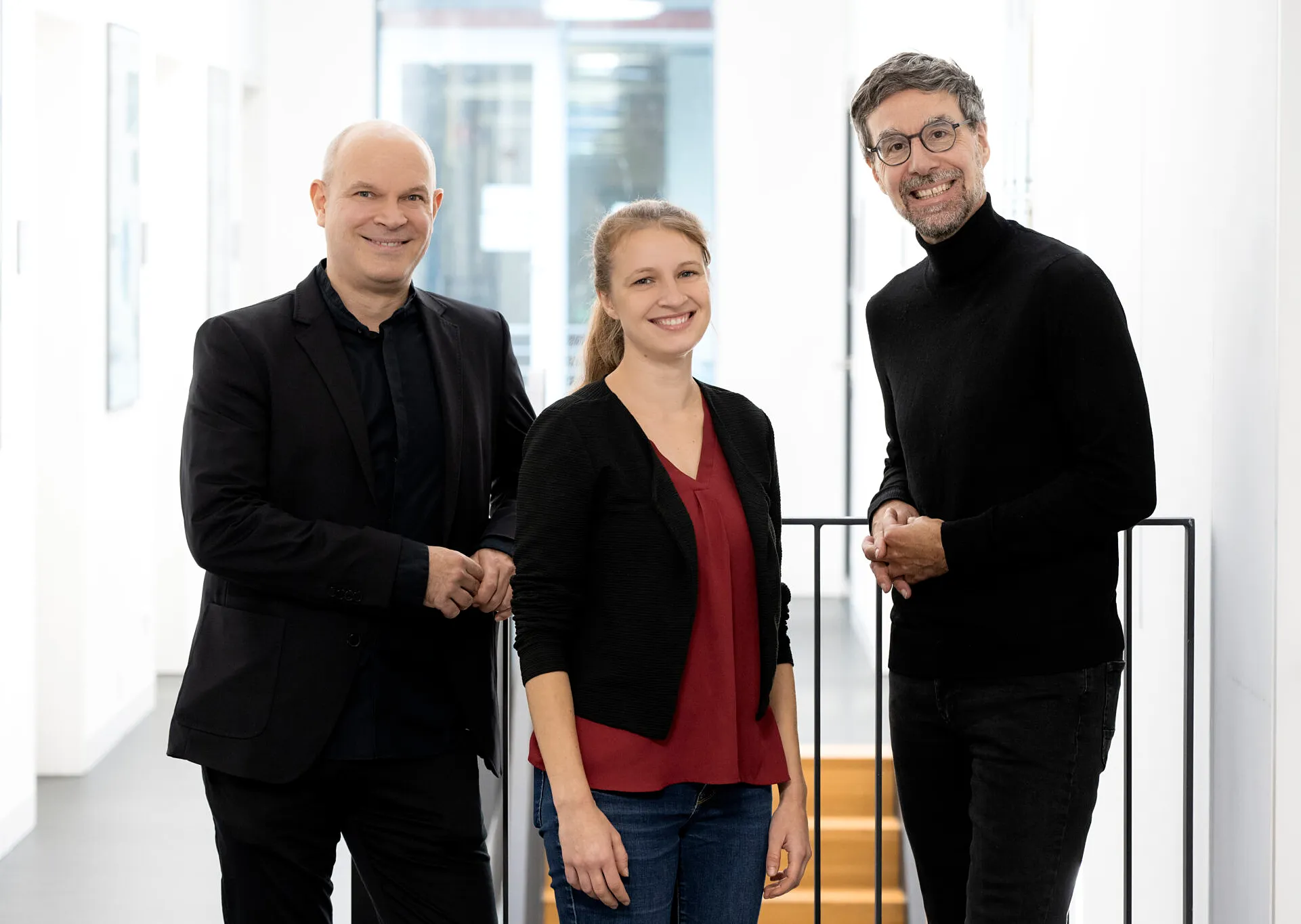
Spokesperson
Prof. Dr. Oliver Till Fackler
Co Spokesperson
Prof. Dr. Kerstin Göpfrich
Co Spokesperson
Prof. Dr. Michael Platten
SynthImmune News





Extra University Partners




supported by