How can simple molecular systems develop the complexity needed for life? The labs of SynthImmune PIs Prof. Dr. Kerstin Göpfrich and Prof. Dr. Michael Platten, together with colleagues at the German Cancer Research Center (DKFZ) and the University of Augsburg, have taken an important step towards answering this question.
Published in Nature Chemical Engineering, their study demonstrates how just a handful of random mutations can transform simple RNA droplets into complex, cell-like structures. Using droplets assembled from RNA nanostars, the team showed that mutations can trigger the formation of stable internal compartments, or vacuoles. These structures do more than change the droplets’ appearance: they drive micrometre-scale movement, promote droplet fusion and enable selective uptake and storage of molecular cargo.
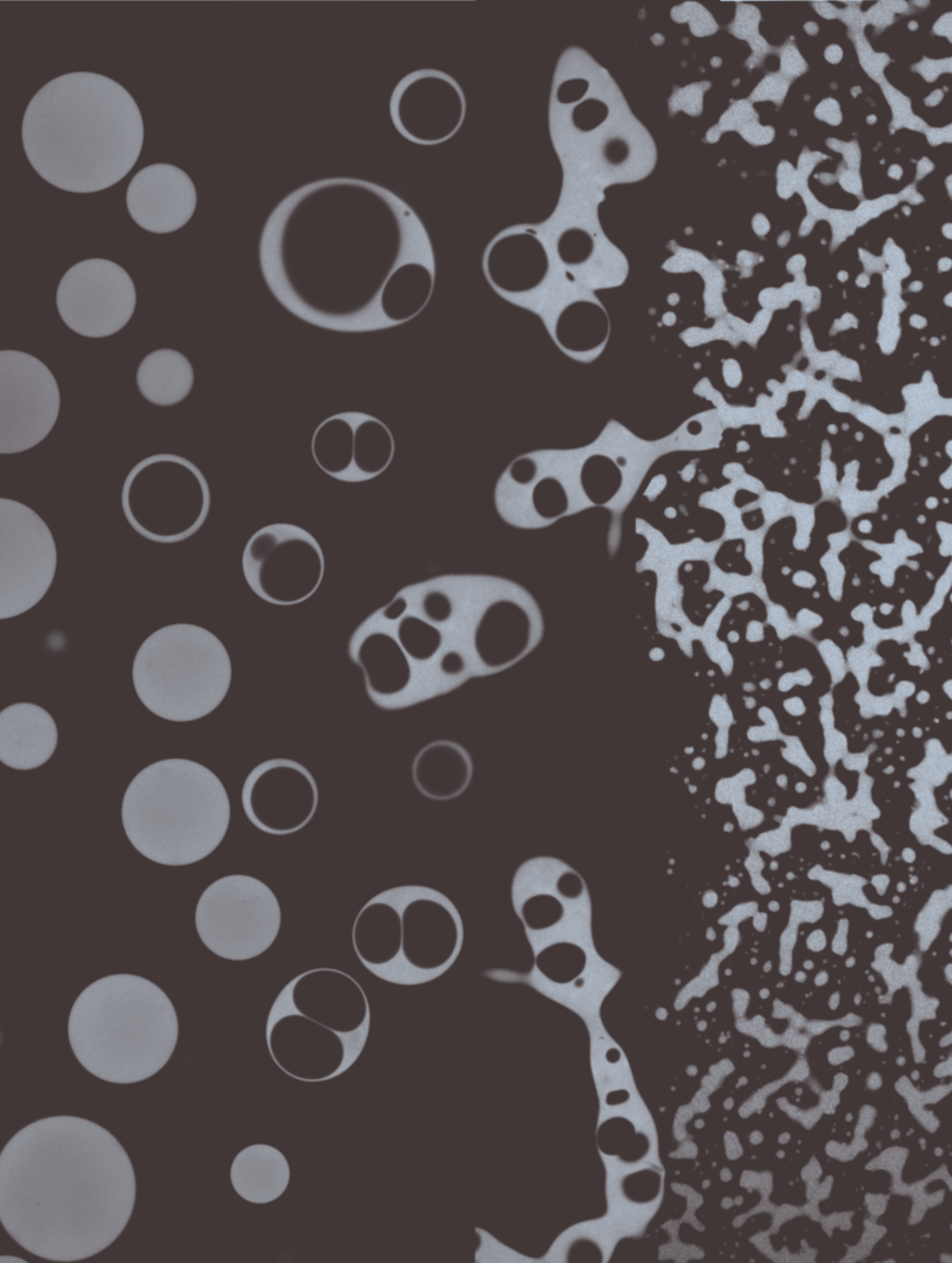
The findings demonstrate how molecular variation alone can generate unexpected structures and functions, potentially providing a new route towards the evolution of synthetic cells.
The research also opens exciting perspectives for SynthImmune, where our researchers aim to harness molecular evolution to develop synthetic immune components. Rather than designing every function from scratch, the team hopes to use mutagenesis and selection to evolve synthetic immune effectors towards desired therapeutic functions.